


What Is Repmold? Meaning, Correct Spelling and Facts
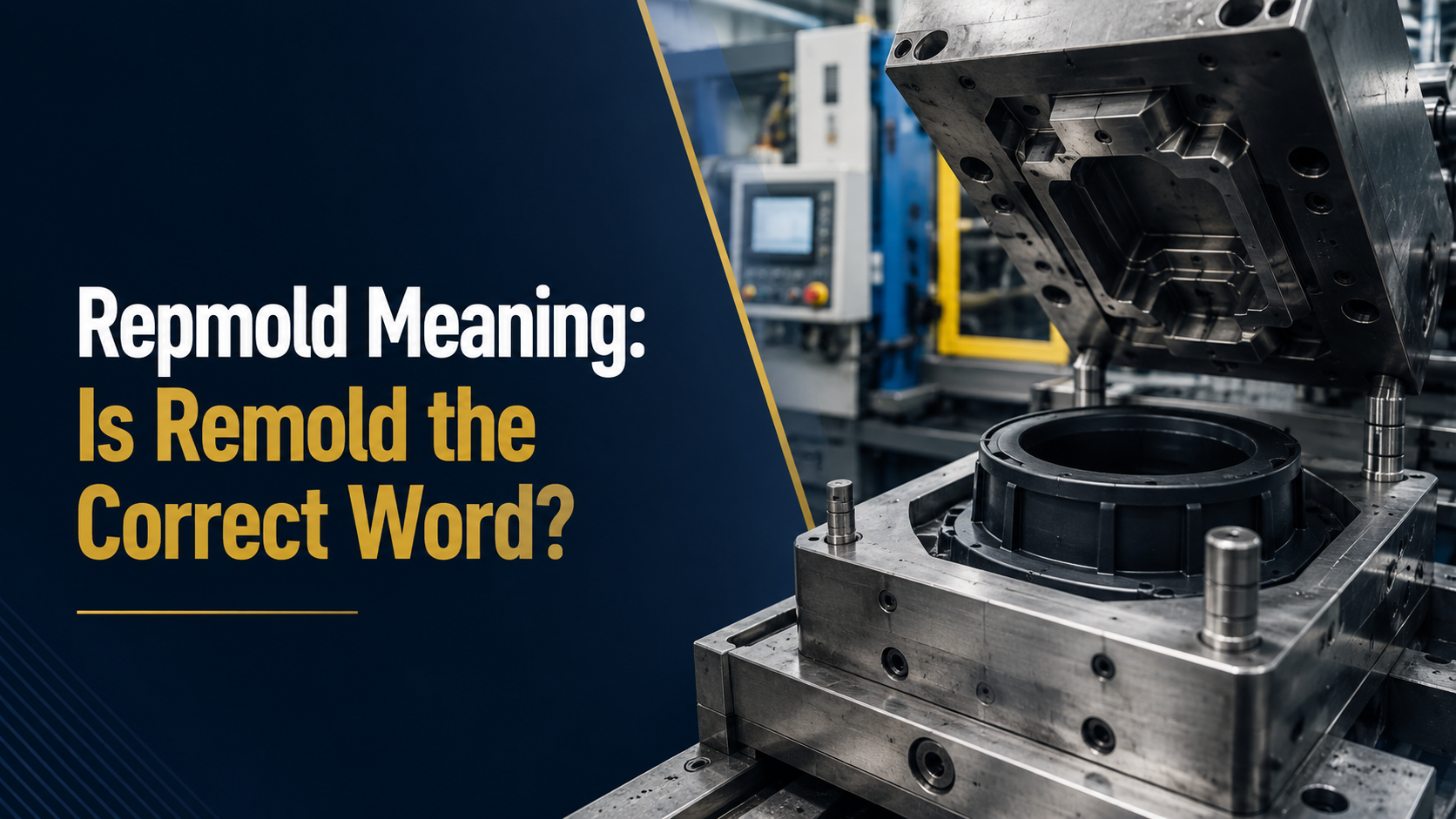
Repmold is not documented as a standard manufacturing technology, material or AI-powered production system. In most contexts, it appears to be a misspelling or invented variation of remold, which means to mould something again or reshape it.
Some websites describe RepMold as an advanced system combining artificial intelligence, digital moulds, automation and 3D printing. However, these claims are not supported by identifiable product documentation, recognised industry standards or authoritative technical sources.
What Does Repmold Mean?
Repmold does not currently have one verified technical definition.
Someone searching for the term may be looking for:
- The English word remold
- A process involving moulding something again
- Replication moulding
- A company, username or brand using a similar name
- Clarification after reading conflicting online explanations
The surrounding context matters. Repmold should not automatically be treated as the name of an established technology.
Repmold at a Glance
Here is the simplest distinction:
- Repmold: Not a recognised standard English or manufacturing term
- Remold: The American spelling for moulding or shaping something again
- Remould: The usual British spelling
- Replication moulding: A separate manufacturing description that may involve copying the shape or surface of an original item
Without an official source, it is inaccurate to claim that RepMold is a specific AI tool, material or manufacturing platform.
Is Repmold a Real Word?
Repmold does not appear as a standard entry in major English dictionaries.
The closest documented word is remold. The Merriam-Webster Dictionary defines remold as moulding something again or reshaping it.
Repmold may appear online because of:
- A typing mistake
- Confusion with remold
- A combination of “replication” and “mold”
- An invented brand or project name
- AI-generated articles repeating an unsupported definition
- Writers interpreting an unfamiliar keyword without checking its origin
Repeated use across several blogs does not establish a term as an official technology.
Is Remold the Correct Spelling?
In most general English contexts, remold or remould is the correct word.
Remold is mainly used in American English, while remould is the standard British variation. Both words describe reshaping, restructuring or moulding something again.
The Oxford Learner’s Dictionaries lists remold as the American form and remould as the British form.
Examples include:
- Remoulding a plastic component
- Reshaping a damaged object
- Moulding a material into a different form
- Figuratively reshaping an idea, organisation or system
The correct spelling depends on the target form of English, but neither version requires the letter “p.”
What Does Remolding Mean in Manufacturing?
In manufacturing, remolding generally means shaping a material or component again.
The exact process depends on the material, its condition and the intended result. Plastic, rubber, composite materials and other products require different temperatures, equipment and quality controls.
A general remolding process may involve:
- Inspecting the original material or component.
- Determining whether it can be processed safely.
- Preparing or softening the material.
- Placing it in suitable tooling or a mould.
- Applying controlled pressure or temperature.
- Allowing the new shape to cool or cure.
- Inspecting the finished component.
This is only a general explanation. There is no single remolding method that applies to every material or product.
Molding vs Remolding
Molding and remolding are related but different.
Molding is the process of giving a material its required shape by using a mould.
Remolding means moulding or shaping the material again after it has already been formed.
For example, a manufacturer may initially mould a plastic part into its original shape. If the material is suitable for further processing, it may later be reshaped or remoulded.
Not every product can be remoulded. Material condition, contamination, previous processing and safety requirements can affect whether reuse is possible.
Is Repmold the Same as Replication Molding?
Repmold should not automatically be treated as an abbreviation for replication molding.
Replication molding generally describes a process used to reproduce the shape, details or surface characteristics of an original pattern. A mould is created from the master object and used to produce one or more copies.
Depending on the application, the process may involve:
- A master pattern
- A mould or negative impression
- Casting material
- Curing or cooling
- Removal from the mould
- Inspection of the reproduced item
Replication molding is a descriptive manufacturing phrase. It does not prove that a separate technology called RepMold exists.
Is Repmold an AI Manufacturing System?
No authoritative evidence currently establishes RepMold as a recognised AI manufacturing system.
An actual technology platform would normally have verifiable signals such as:
- An official product website
- Identifiable developers or manufacturers
- Technical documentation
- Product specifications
- Demonstrations or implementation records
- Customer information
- Independent industry coverage
- Patents, research or regulatory records where relevant
Current articles making broad claims about RepMold generally do not provide this evidence.
Artificial intelligence, computer-aided design, automation and 3D printing are genuine technologies used in modern manufacturing. However, combining their names in an article does not prove the existence of a system called RepMold.
Is Repmold a Special Material?
There is also no reliable evidence that Repmold is a recognised class of composite, polymer, resin or other manufacturing material.
A genuine commercial material would usually have:
- A manufacturer
- A technical data sheet
- A defined chemical or material composition
- Mechanical or performance properties
- Safety information
- Recommended applications
- Testing or certification details
Descriptions claiming that Repmold is lightweight, highly durable, sustainable or suitable for medical and automotive products should not be accepted without this documentation.
Could Repmold Be a Brand Name?
It is possible for a company, website or individual project to use RepMold as a brand name. Invented names do not need to appear in a dictionary.
However, a brand name should not be confused with a general industry term.
Before treating RepMold as a particular brand, check for:
- An official website
- Company registration details
- A clear product or service
- Verified contact information
- Consistent branding
- Independent references
- Relevant trademark records
A brand using the name would only establish its own commercial identity. It would not prove that RepMold is a recognised manufacturing process across the industry.
Why Do RepMold Definitions Conflict Online?
Unfamiliar keywords often develop conflicting definitions when websites publish content without finding the original source.
This may happen when:
- A misspelling begins receiving search impressions
- One unsupported article is copied by other websites
- AI writing tools expand a term without evidence
- Real manufacturing concepts are combined into an invented system
- General benefits are presented without tests or examples
- Speculation is written as confirmed fact
This can make a fictional or unclear concept appear credible because several pages repeat similar language. The number of articles making a claim is less important than the quality of their original evidence.
How Can You Verify a New Manufacturing Term?
Use the following checks before accepting claims about an unfamiliar technology:
- Search for an official company or product website.
- Look for identifiable developers or manufacturers.
- Check recognised dictionaries if it is presented as a general word.
- Search technical standards and professional organisations.
- Look for product documentation or specifications.
- Check whether independent industry sources use the same definition.
- Confirm whether real products or projects demonstrate the technology.
- Separate marketing statements from tested technical facts.
If none of these signals exists, describe the term as unverified instead of presenting it as established technology.
FAQ
What is Repmold in simple terms?
Repmold does not have a verified technical definition. It is most likely a misspelling or invented variation of remold, meaning to mould or shape something again.
Is Repmold a manufacturing technology?
No authoritative product documentation or industry standard currently establishes RepMold as a specific manufacturing technology.
What is the correct spelling of Repmold?
If the intended meaning is to shape something again, the correct spelling is remold in American English or remould in British English.
What does remold mean?
Remold means to mould, form or reshape something again. It can describe a physical object or be used figuratively for an idea or system.
Is Repmold powered by artificial intelligence?
There is no reliable evidence confirming the existence of an AI platform called RepMold. AI is used in manufacturing, but that does not verify this particular name.
Is Repmold a type of sustainable material?
No verified technical data establishes Repmold as a particular material. Claims about its durability, sustainability or performance require identifiable product documentation.
Are remolding and replication molding the same?
No. Remolding means shaping something again. Replication molding focuses on reproducing the shape or details of an original pattern.
Final Takeaway
Repmold should not be presented as a proven AI manufacturing system, advanced composite or recognised industry process without authoritative documentation.
The closest verified English word is remold, or remould in British English, meaning to mould or reshape something again. Replication molding is also a genuine descriptive phrase, but it should not automatically be shortened to RepMold.
When an unfamiliar term has several conflicting definitions, check dictionaries, technical documentation and identifiable organisations before treating online claims as facts.
You May Also Like: What Does Simbramento Mean? Correct Spelling and Use
