


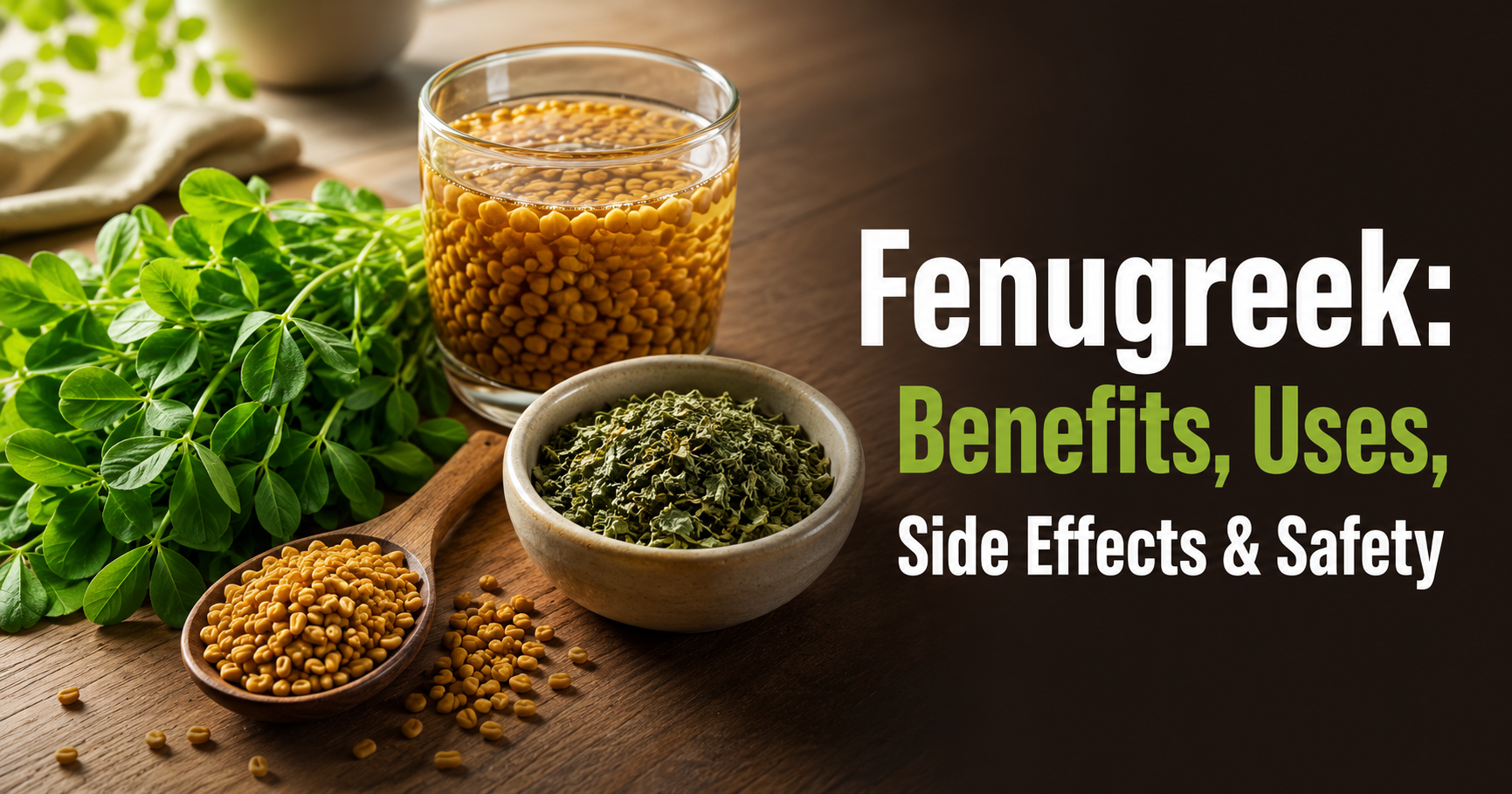
Fenugreek: Benefits, Uses, Nutrition and Side Effects
Fenugreek, commonly called methi, is a useful food ingredient with a long history in Indian cooking. Its seeds provide fibre, protein and minerals, while its fresh and dried leaves add a distinctive flavour to curries, dals and flatbreads.
Research suggests fenugreek may modestly support blood-sugar control, but evidence for weight loss, breast milk production, testosterone, digestion and other popular claims remains limited or mixed. It should not replace prescribed treatment.
Normal food quantities are generally considered safe for most adults. Concentrated supplements require more caution, particularly during pregnancy or when taking diabetes or blood-thinning medicines.
AI Overview: Fenugreek at a Glance
Fenugreek, or Trigonella foenum-graecum, is an annual plant from the pea and bean family. It is known as methi in India and is used in three main forms: fresh leaves, dried leaves and yellowish-brown seeds.
Here are the most important points:
- Best-supported possible benefit: Fenugreek may help improve some blood-sugar measurements in people with type 2 diabetes, but study quality varies.
- Breastfeeding: Evidence that it increases milk production is mixed, and some users experience side effects.
- Hormones: A few small studies of specific extracts have reported changes in testosterone or sexual function, but ordinary methi seeds cannot be assumed to produce the same result.
- Cholesterol: Some trials report improvements, especially among people with metabolic conditions, but it is not a substitute for cholesterol treatment.
- Digestion: Its fibre may affect bowel movements and fullness, but fenugreek can also cause gas, diarrhoea and bloating.
- Menstrual pain: Small studies suggest possible relief, but stronger research is needed.
- Pregnancy: Food quantities may be acceptable, but medicinal or supplement-level amounts should be avoided unless specifically approved by a qualified clinician.
- Interactions: It may increase the risk of low blood sugar when combined with diabetes medicines and may interfere with medicines affectied leaves add a distinctive flavour to curries, dals and flatbreads.
Research suggests fenugreek may modestly support blood-sugar control, but evidence for weight loss, breast milk production, testosterone, digestion and other popular claims remains limited or mixed. It should not replace prescribed treatment.
Normal food quantities are generally considered safe for most adults. Concentrated supplements require more caution, particularly during pregnancy or when taking diabetes or blood-thinning medicines.
What Is Fenugreek?
Fenugreek is an annual herb belonging to the Fabaceae family, which also includes chickpeas, lentils, peanuts and peas. Its accepted scientific name is Trigonella foenum-graecum.
The plant has three-part green leavesflowers and narrow pods containing hard, golden or yellowish-brown seeds. It is now grown in many countries, although botanical records identify its native range as extending from Iraq through parts of Iran, Afghanistan and Pakistan.
Fenugreek is especially important in South Asian, Middle Eastern, North African and Mediterranean food traditions. Indian cooks use the leaves as a vegetable, the dried leaves as a finishing herb and the seeds as a spice.
Fenugreek leaves, seeds and kasuri methi
The different forms of fenugreek are not interchangeable.
Faves are soft, green and slightly bitter. They can be cooked like other leafy vegetables and are used in dishes such as aloo methi, methi dal, methi paratha and methi chicken.
Fenugreek seeds, or methi dana, are hard and strongly flavoured. They are added in small quantities to pickles, curries, spice blends, vegetable dishes and tempering oils.
Kasuri methi consists of dried fenugreek leaves. It has a concentrated aroma and is often crushed between the palms before being added near the end of cooking.
Fenugreek powder is made from ground seeds. It is stronger and more bitter than dried leaves, so replacing kasuri methi with seed powder can change a dish significantly.
Why does fenugreek smell like maple syrup?
Fenugreek contains an aromatic compound called sotolon. At different concentrations, sotolon can smell like curry, caramel, burnt sugar or maple syrup.
After a person consumes a concentrated amount, this aroma may become noticeable in sweat, urine, skin or breast milk. The smell is usually harmless and disappears after use is reduced or stopped.
However, a maple syrup-like odour in a newborn who has not been exposed to fenugreek can have other medical explanations and should not be ignored.
Fenugreek Nutrition
Fenugreek seeds contain carbohydrates, fibre, protein, fat and several minerals. An approximately one-tablespoon serving of whole seeds provides roughly 35 calories, 3 grams of fibre, 3 grams of protein and small amounts of magnesium, manganese and iron. Exact values vary with seed variety, serving size and processing.
The seeds also contain naturally occurring plant compounds such as:
- Galactomannan and other fibres.
- Saponins.
- Trigonelline.
- Flavonoids.
- 4-hydroxyisoleucine.
- Coumarin-related compounds.
These substances are being studied for their possible metabolic and hormonal effects. Their presence does not automatically prove that fenugreek treats disease.
Seeds versus fresh leaves
Fenugreek seeds are denser in calories, fibre and protein because they contain little water.
Fresh methi leaves contain more water and are normally eaten in larger culinary portions. They contribute flavour and can be included as part of a varied vegetable intake.
A tablespoon of seeds and a bowl of cooked methi leaves therefore have different nutritional profiles. Claims based on concentrated seed extracts should not be applied automatically to fresh leaves.
Potential Health Benefits of Fenugreek
Fenugreek has been used traditionally for many purposes, but traditional use is not the same as proven clinical effectiveness.
Clinical studies have examined blood sugar, cholesterol, lactation, menstrual discomfort, testosterone and appetite. Results are promising in some areas, but many trials are small, use different products or have design limitations.
May support blood-sugar management
Blood-sugar control is the area with the most promising research.
Fenugreek seeds contain fibre that may slow digestion and carbohydrate absorption. Laboratory and clinical research has also examined 4-hydroxyisoleucine and other compounds that may influence insulin-related processes.
Recent analyses of clinical trials have reported reductions in fasting blood glucose, HbA1c and insulin-resistance measurements among some people with type 2 diabetes. However, the studies used different doses, preparations and treatment periods, making it difficult to define a reliable standard dose. Some trials also had methodological weaknesses.
Fenugreek should not replace insulin, metformin or any other prescribed treatment. Taking it alongside diabetes medication may cause blood sugar to fall too low.
People who wish to use it regularly for diabetes should discuss the plan with their doctor and continue monitoring their glucose.
May affect cholesterol and heart-health markers
Some clinical trials have reported reductions in total cholesterol, LDL cholesterol and triglycerides after fenugreek supplementation. Its soluble fibre may help reduce the absorption of certain dietary fats and bile acids.
The effect is not consistent across all studies, and improvements appear more likely in people who already have diabetes or abnormal lipid levels.
Fenugreek is not an alternative to statins, prescribed medicines, physical activity or a balanced eating plan. It is more realistic to view methi as one possible food component within an overall heart-supportive diet.
Fenugreek and breast milk production
Fenugreek is commonly promoted as a galactagogue, meaning a substance used to increase breast milk production.
Some small studies and user surveys report increased milk supply. Other trials find little or no meaningful benefit. Reviews describe the overall evidence as mixed, and many studies combine fenugreek with other herbs, making it difficult to identify which ingredient caused the effect.
Fenugreek can also cause digestive discomfort, allergic reactions and blood-sugar changes. Those effects may occur in the breastfeeding parent and possibly the baby.
Low milk supply can result from poor attachment, infrequent feeding, pain, hormonal conditions, retained placental tissue, certain medicines or insufficient breast stimulation. A qualified lactation consultant or healthcare professional should assess these causes before supplements are used.
Testosterone and sexual health
Several small trials have tested specific, branded fenugreek extracts in men. Some reported changes in testosterone measurements, body composition, energy or sexual-function scores.
These findings do not prove that ordinary methi seeds raise testosterone. Commercial extracts may be standardised, combined with vitamins or taken at concentrations far above culinary use.
A 2024 trial of a particular fenugreek formulation examined different extract doses in middle-aged and older men, but results from one product cannot be generalised to all powders, capsules or seeds.
Fenugreek is not a treatment for clinically low testosterone. Symptoms such as low libido, fatigue, erectile difficulty or reduced muscle strength can have many causes and deserve proper medical assessment.
Menstrual discomfort
A small group of clinical studies suggests that fenugreek seed preparations may reduce pain associated with primary dysmenorrhoea.
A review found a reduction in pain compared with placebo, but it included only a small number of studies. Differences in doses, product quality and study design limit confidence in the result.
Severe or worsening period pain should not be treated only with herbs. Conditions such as endometriosis, fibroids, adenomyosis, pelvic infection or ovarian problems can cause significant pain.
Digestion, appetite and weight management
Fenugreek’s fibre can absorb water and add bulk. This may contribute to fullness and changes in bowel movements.
It is often claimed that methi water improves metabolism, burns fat, detoxifies the body or removes belly fat. These claims are much stronger than the available evidence.
A person may feel fuller after consuming fibre, but drinking fenugreek water does not directly melt fat. Sustainable weight change still depends mainly on long-term energy balance, diet quality, sleep, activity and health conditions.
Fenugreek may also worsen digestive symptoms. Gas, diarrhoea, nausea, stomach discomfort and bloating are among its most commonly reported side effects.
Benefits That Are Commonly Exaggerated
Fenugreek is frequently promoted as a solution for unrelated health and beauty concerns. Many of these claims come from traditional use, laboratory findings, small trials or personal stories rather than strong human evidence.
Does fenugreek grow hair?
Fenugreek contains protein, iron and plant compounds, but there is not enough reliable clinical evidence to say that eating seeds, drinking methi water or applying a homemade paste will regrow hair.
Hair loss may be related to genetics, iron deficiency, thyroid disease, hormonal changes, stress, medication, scalp disease or nutritional restriction.
Applying fenugreek paste to the scalp may also cause irritation or an allergic reaction. Persistent hair loss should be assessed according to its cause.
Does fenugreek increase breast size?
There is no reliable clinical evidence that fenugreek permanently increases breast size.
Claims are often based on the presence of plant compounds that may have weak hormone-like activity. That does not mean the herb produces predictable or safe breast growth.
Trying to change breast size with concentrated supplements may expose a person to digestive problems, allergies, medication interactions and blood-sugar changes without providing the desired result.
Does methi water detoxify the body?
The body already removes waste through the liver, kidneys, lungs and digestive system.
Fenugreek water may contribute fluid and a small amount of extracted plant compounds, but there is no strong evidence that it removes toxins, microplastics or accumulated waste from the body.
A health claim should not be accepted simply because the drink is natural or has been used for a long time.
How to Use Fenugreek
The safest and most practical way for most people to use fenugreek is as a food ingredient.
Different forms require different preparation methods.
Whole fenugreek seeds
Whole seeds can be added in small recipe quantities to:
- Pickles.
- Lentil dishes.
- Vegetable curries.
- Sambar powder.
- Panch phoron.
- Tempering oils.
- Homemade spice mixes.
Avoid burning them during tempering. Burnt fenugreek becomes intensely bitter and can affect the whole dish.
Soaked methi seeds and methi water
To prepare soaked seeds, place a small recipe-sized quantity in clean water and leave it covered for several hours or overnight. The seeds soften and become easier to chew.
Methi water is the liquid left after soaking. It may taste mildly bitter.
Soaking does not turn fenugreek into a proven medicine. There is also no good evidence that consuming it on an empty stomach produces better results than using it with food.
People taking diabetes medicines should be especially careful with daily soaked seeds because the combined glucose-lowering effect may become unpredictable.
Fenugreek powder
Ground fenugreek seed can be used in spice blends, curries and pickles.
Because it is concentrated and bitter, begin with the amount stated in a reliable recipe rather than adding a large spoonful for health purposes.
Store the powder in an airtight container away from heat, moisture and sunlight. Whole seeds normally retain their aroma longer than pre-ground powder.
Fresh methi leaves
Fresh leaves should be sorted and washed carefully because soil can collect around the stems and leaf clusters.
They can be:
- Stir-fried.
- Mixed into dal.
- Added to potato dishes.
- Kneaded into paratha dough.
- Cooked with paneer, chicken or pulses.
- Added to savoury batters.
Cooking softens the leaves and reduces some of their bitterness.
Kasuri methi
Kasuri methi is dried leaf, not ground seed.
Crush it between your palms before adding it to curries, paneer dishes, dal makhani, sauces or marinades. It is usually added near the end so that its aroma remains noticeable.
Too much can overpower a dish, so small recipe whether fenugreek caused a change. Diet, medication, illness, lighting, exercise and many other factors may be involved.
Fenugreek: Food or Medicine?
Fenugreek is best established as a food.
Fresh methi can add variety to vegetable dishes. Kasuri methi gives curries a distinctive restaurant-style aroma. Whole seeds contribute bitterness and complexity to pickles, dals and spice blends.
Its medical role is less certain. Blood-sugar research is promising, but study limitations prevent fenugreek from being recommended as a stand-alone diabetes treatment. Evidence for lactation, testosterone, cholesterol, menstrual discomfort and weight management is weaker or product-specific.
For most healthy adults, the sensible approach is to enjoy fenugreek in normal meals. Supplements should be treated like biologically active products, not simply concentrated food.
Fenugreek can be useful, flavourful and nutritious without being presented as a cure for every health concern.
Frequently Asked Questions
What is fenugreek called in India?
Fenugreek is commonly called methi. The seeds are known as methi dana, fresh leaves are called methi leaves, and the dried leaves are sold as kasuri methi.
Can I consume fenugreek every day?
Most healthy adults can generally eat normal culinary quantities regularly. Daily supplements or large medicinal amounts require more caution because they may affect digestion, blood sugar, allergies and medicines.
Does methi water reduce blood sugar?
Fenugreek may support blood-sugar control, but methi water has not been proven to replace diabetes treatment. People using glucose-lowering medicines should consult their doctor before drinking it regularly.
Does fenugreek increase breast milk?
The evidence is mixed. Some people report an increase, while clinical reviews find uncertain or limited benefit. A lactation consultant should assess low milk supply before supplements are taken.
Is fenugreek safe during pregnancy?
Small food quantities may be acceptable, but medicinal amounts and supplements should be avoided during pregnancy unless approved by a qualified healthcare professional.
Can fenugreek help with hair growth?
There is not enough strong clinical evidence to show that eating or applying fenugreek regrows hair. Hair loss should be evaluated according to its underlying cause.
Why does fenugreek make the body smell sweet?
Fenugreek contains sotolon, an aromatic compound that can create a maple syrup-like smell in sweat, urine and breast milk. whether fenugreek caused a change. Diet, medication, illness, lighting, exercise and many other factors may be involved.
You May Also Like: Klemroot Explained
