


Gastroschisis Survival & Care: 7 Critical Milestones Every Parent Should Know
If you searched for “Gastroshiza,” you are most likely looking for gastroschisis, the standard English medical term. Gastroschisis is a birth defect in which a baby’s intestines extend outside the body through an opening beside the belly button. Treatment requires specialist newborn and surgical care after birth. The outlook is often reassuring: modern clinical references report overall survival above 90%, although an individual baby’s recovery can differ significantly depending on the condition of the bowel and whether the gastroschisis is simple or complex. Read the NIH/NCBI clinical overview of gastroschisis.
Medical disclaimer: This article is for general educational purposes only. It does not replace diagnosis, pregnancy management, treatment, or individualized advice from your obstetrician, maternal-fetal medicine specialist, neonatologist, pediatric surgeon, or other qualified healthcare professional.
What Is Gastroschisis?
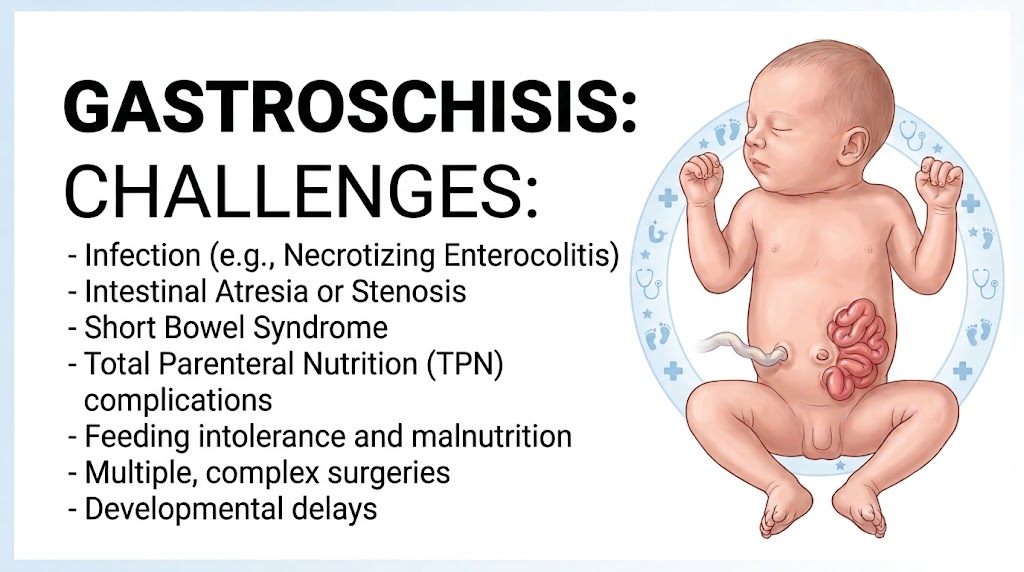
Gastroschisis is a congenital abdominal wall defect. There is an opening in the baby’s abdominal wall, usually beside the belly button, through which the intestines extend outside the body.
Unlike some other abdominal wall defects, the exposed intestines do not have a protective sac covering them. Because the bowel is exposed to amniotic fluid during pregnancy, it can become irritated, swollen, shortened, or twisted.
According to the Centers for Disease Control and Prevention (CDC), researchers estimate that approximately 1 in every 2,564 babies in the United States is born with gastroschisis. Read the CDC’s official gastroschisis information.
Sometimes organs other than the intestines, such as part of the stomach, may also be outside the abdomen.
Is Gastroshiza the Same as Gastroschisis?
If you typed or heard Gastroshiza, the medical condition you are probably looking for in English-language health information is gastroschisis.
Use gastroschisis when searching U.S. medical websites, hospital resources, research literature, or when discussing the diagnosis with healthcare professionals.
It is commonly pronounced roughly:
gas-troh-SKEE-sis
Using the medically recognized spelling also makes it easier to find reliable information rather than unrelated or inaccurate search results.
Gastroschisis vs. Omphalocele
Gastroschisis and omphalocele can both cause organs to appear outside a baby’s abdomen, but they are different birth defects.
With gastroschisis, the opening is beside the belly button, and the bowel generally has no protective membrane covering it.
With omphalocele, organs extend through the belly-button area and are usually enclosed within a thin sac.
The distinction matters because treatment, associated medical conditions, prenatal evaluation, and counseling may differ.
What Does the Gastroschisis Survival Rate Mean?
For many parents, the first question after diagnosis is:
Will my baby survive?
Modern neonatal and pediatric surgical care has greatly improved outcomes. The NIH/NCBI clinical reference reports an overall survival rate greater than 90% for gastroschisis.
That figure should not be interpreted as a prediction for a specific baby.
An individual baby’s outlook may depend on factors such as:
- Whether gastroschisis is simple or complex
- The amount and condition of bowel outside the abdomen
- Intestinal atresia
- Bowel narrowing or obstruction
- Volvulus
- Loss of blood supply to part of the bowel
- Prematurity
- Fetal growth
- Infection
- Whether bowel tissue needs to be removed
- How quickly normal intestinal function returns
- How well feeds are tolerated
This is why two babies with the same general diagnosis may have very different NICU experiences.
For parents, one of the most useful questions to ask is:
“Does my baby’s condition appear to be simple or complex gastroschisis?”
Simple vs. Complex Gastroschisis
The distinction between simple and complex gastroschisis can have a major effect on the baby’s treatment and recovery.
What Is Simple Gastroschisis?
Simple gastroschisis generally means the intestines are outside the abdomen but there is no major additional intestinal complication such as atresia, bowel perforation, volvulus, or tissue death.
These babies still need specialized neonatal and surgical treatment.
What Is Complex Gastroschisis?
Complex gastroschisis means the abdominal wall defect occurs together with an additional significant intestinal problem.
The American Academy of Pediatrics’ HealthyChildren.org identifies complications such as intestinal atresia, volvulus, bowel narrowing, and tissue death or ischemia as examples associated with complex gastroschisis. Read the AAP parent guide to gastroschisis.
Possible complications include:
- Intestinal atresia: part of the intestine has not formed as a continuous open passage
- Stricture or stenosis: an area of intestine is abnormally narrow
- Volvulus: the intestine twists
- Perforation: a hole develops in the bowel
- Ischemia: bowel tissue receives inadequate blood flow
- Necrosis: part of the bowel tissue dies
- Significant loss of usable bowel
Simple vs. Complex Gastroschisis Comparison
| Feature | Simple Gastroschisis | Complex Gastroschisis |
|---|---|---|
| Intestines outside abdomen | Yes | Yes |
| Major additional bowel complication | No | Yes |
| Atresia or volvulus | Not part of the definition | May be present |
| Bowel tissue damage | No major associated damage | May be present |
| Additional surgery | Less likely | More likely |
| Feeding recovery | Often more straightforward | May take considerably longer |
| IV nutrition | Common initially | May be required longer |
| Hospital stay | Often shorter | Often longer and more complicated |
| Long-term intestinal support | Less likely | More likely |
These are general patterns, not guarantees.
A baby with simple gastroschisis can still experience feeding difficulties or other complications, while a baby with complex gastroschisis may make substantial progress with specialist treatment.
The Gastroschisis Journey: 7 Critical Care Milestones
These milestones follow the general path many families experience from prenatal diagnosis through discharge.
They should not be treated as a fixed schedule. Your baby’s medical team may change the timing or order based on pregnancy findings and the newborn’s condition.
Rank #1: Prenatal Diagnosis and Ultrasound Monitoring
Gastroschisis is often discovered during prenatal ultrasound.
The NIH/NCBI clinical overview notes that it is commonly diagnosed during an ultrasound performed at approximately 20 weeks of pregnancy, when free-floating bowel can be seen outside the fetal abdomen. Maternal serum alpha-fetoprotein, or AFP, can also be elevated.
An elevated AFP result does not diagnose gastroschisis by itself. Ultrasound and specialist assessment are needed.
What Happens After Gastroschisis Is Diagnosed?
Care typically becomes more specialized.
Your pregnancy team may involve:
- Obstetricians
- Maternal-fetal medicine specialists
- Fetal medicine specialists
- Neonatologists
- Pediatric surgeons
- NICU teams
- Pediatric nutrition specialists
Doctors may perform additional ultrasound monitoring to assess fetal growth, amniotic fluid, bowel appearance, and other pregnancy findings.
Gastroschisis is associated with an increased risk of fetal growth restriction, making growth monitoring an important part of prenatal care.
Questions to Ask After Prenatal Diagnosis
Consider asking:
- Does this currently appear to be isolated gastroschisis?
- Is there any sign that the bowel is damaged?
- How is my baby’s growth?
- Are you concerned about bowel dilation?
- How frequently will I need ultrasound monitoring?
- Where should I deliver?
- Can I meet the NICU team before delivery?
- Can I speak with a pediatric surgeon before birth?
- What findings could change the delivery plan?
Getting answers before delivery can make the first hours after birth easier to understand.
Rank #2: Determining Whether Gastroschisis Is Simple or Complex
Some aspects of bowel condition may become apparent prenatally, while others are understood more clearly after birth when surgeons can directly assess the intestines.
Doctors look for complications such as:
- Atresia
- Stenosis
- Perforation
- Volvulus
- Necrosis
- Problems with blood flow
- Significant bowel loss
NIH clinical guidance uses the presence or absence of intestinal complications such as atresia, stenosis, perforation, necrosis, or volvulus when distinguishing complex disease.
The classification matters because babies with complex gastroschisis may require additional procedures, longer IV nutrition, and more time before full feeding becomes possible.
Rank #3: Planning Delivery at a Specialized Center
Where the baby is delivered matters.
After birth, a newborn with gastroschisis needs rapid access to specialist care. Ideally, delivery occurs in a hospital able to provide services such as:
- High-risk obstetric care
- Neonatal intensive care
- Neonatology
- Pediatric surgery
- IV fluids and nutrition
- Respiratory support when required
- Specialized bowel protection
NIH guidance states that babies with gastroschisis may benefit from delivery at a facility with high-risk obstetrics, neonatology, NICU resources, and pediatric surgery. Review the NIH/NCBI gastroschisis management guidance.
Does Gastroschisis Require a C-Section?
No, not automatically.
Gastroschisis by itself is not considered an automatic reason for cesarean delivery.
NIH clinical guidance states that gastroschisis alone is not a contraindication to vaginal delivery and supports a trial of labor for many pregnancies.
A C-section may still become necessary because of:
- Ordinary obstetric indications
- Specific fetal concerns
- Maternal complications
- Unusual anatomy
- Other findings identified by the care team
The exact timing of delivery is also individualized.
Doctors may consider:
- Gestational age
- Fetal growth
- Bowel appearance
- Fetal monitoring results
- Amniotic fluid
- Maternal health
- Signs that the baby may be under stress
Do not change a planned delivery date or delivery method based on a general online article. These decisions need to be made with the maternal-fetal medicine and obstetric teams caring for the pregnancy.
Rank #4: Protecting the Bowel Immediately After Birth
The first minutes after delivery may look different from what parents expected from a routine birth.
Because the baby’s intestines are outside the abdomen, the medical team works quickly to:
- Protect the exposed bowel
- Prevent excessive fluid loss
- Keep the baby warm
- Stabilize breathing and circulation
- Establish IV access
- Decompress the stomach
- Prepare for surgical management
The CDC states that babies with gastroschisis may require IV nutrition, antibiotics, temperature control, and staged or immediate surgical treatment depending on how much intestine or other organs are outside the abdomen.
What Is the Plastic Bowel Bag?
The exposed bowel may be placed inside a sterile protective plastic bag.
Seattle Children’s explains that shortly after delivery a special plastic covering may be used to protect the bowel and help keep it warm and moist until the next stage of treatment. See Seattle Children’s gastroschisis treatment guide.
Why Does the Baby Have a Tube in the Stomach?
A tube may be passed through the mouth or nose into the stomach.
This is commonly called an:
- OG tube, or orogastric tube
- NG tube, or nasogastric tube
It helps remove air and stomach contents and reduces pressure inside the digestive system while the intestines recover.
The baby may also need:
- IV fluids
- Antibiotics
- Continuous heart and oxygen monitoring
- Temperature support
- Respiratory assistance when necessary
Seeing several tubes and monitors can be upsetting, but each piece of equipment has a specific purpose.
Rank #5: Gastroschisis Surgery and Closure
Every baby with gastroschisis needs the abdominal organs returned safely to the abdomen and the abdominal wall defect managed or closed.
That does not mean every baby undergoes exactly the same operation.
The surgical team considers:
- How much bowel is outside the body
- How swollen the bowel is
- The condition of the intestine
- The size of the abdominal opening
- How much room exists inside the abdomen
- Blood supply to the bowel
- The baby’s breathing and circulation
- Whether additional intestinal problems are present
The goal is not simply to push the bowel back inside as quickly as possible. The organs must be returned without creating unsafe pressure inside the baby’s abdomen.
Primary Closure
When the bowel can safely fit into the abdominal cavity, the medical team may perform a primary closure.
The bowel is returned to the abdomen and the defect is closed during one procedure.
Primary closure is not appropriate if returning everything immediately would create excessive pressure.
Sutureless or Umbilical Closure
Some pediatric centers use a sutureless closure in selected babies.
Once the bowel is reduced, the umbilical cord may be positioned over the opening and covered with a dressing so the area heals without a traditional sutured closure.
Seattle Children’s describes primary umbilical closure as one approach used for appropriate babies at its center.
Whether this technique is appropriate depends on:
- The baby’s anatomy
- Bowel condition
- Clinical stability
- Surgeon preference
- Hospital practice
Staged Silo Closure
Sometimes there is not enough space inside the abdomen to safely return all the bowel immediately.
Doctors may then use a silo.
A silo is a sterile protective pouch placed around the exposed intestines.
Over time, the bowel is gradually moved back into the abdomen. Once sufficient reduction has occurred, the abdominal defect can be closed.
The American Academy of Pediatrics explains that a silo may be placed around the intestine so it can slowly move back into the abdomen before final closure.
Gastroschisis Closure Options at a Glance
| Closure Method | What Happens | Why It May Be Chosen |
|---|---|---|
| Primary closure | Bowel is returned and the abdominal defect is closed | When organs fit safely inside |
| Sutureless closure | Bowel is reduced and the defect heals beneath an umbilical dressing | Used for selected babies |
| Silo/staged closure | Bowel is gradually reduced using a protective silo | Used when immediate reduction would create excessive pressure |
There is no single closure method that is automatically best for every baby.
The safest approach depends on the baby’s anatomy and clinical condition.
Rank #6: Waiting for the Intestines to Start Working
For many families, this stage requires patience.
The abdominal wall may already be closed while the baby is still unable to drink breast milk or formula normally.
That does not automatically mean something has gone wrong.
The exposed bowel can be swollen and slow to move food through the digestive system. After the bowel is returned to the abdomen, it needs time to recover.
Why Is a Baby With Gastroschisis NPO?
You may hear the NICU staff say the baby is NPO.
This means the baby is temporarily receiving nothing by mouth.
Doctors delay milk feeding until they believe the intestine is ready to handle it safely.
They may monitor:
- Stomach-tube output
- Abdominal swelling
- Stool passage
- Signs of bowel activity
- Vomiting
- The baby’s response when very small feeds begin
What Is TPN?
Until the baby can receive enough nutrition through the gastrointestinal tract, nutrients can be provided intravenously.
This is known as parenteral nutrition, often referred to as TPN, or total parenteral nutrition.
It can provide:
- Glucose
- Protein
- Fat
- Vitamins
- Minerals
- Electrolytes
The American Academy of Pediatrics notes that babies with gastroschisis receive nutrition through the veins while the intestines heal before transitioning to feeding through the gastrointestinal tract.
Babies requiring longer periods of IV nutrition may need a central venous line and careful monitoring.
How Long Does It Take the Bowel to Start Working?
There is no single reliable number.
The recovery period varies according to bowel condition and whether complications are present.
Some babies begin progressing toward milk feeds relatively quickly. Others, especially babies with complex gastroschisis or bowel damage, may require a much longer period of nutritional support.
Avoid comparing your baby’s recovery day-by-day with another family’s story.
The diagnosis may be the same while the underlying bowel condition is very different.
Rank #7: Starting Milk Feeds and Preparing to Go Home
When the healthcare team believes the bowel is ready, feeding generally begins slowly.
The first amount may be very small.
Feeds are then adjusted according to how the baby responds.
Feeding methods may include:
- Breast milk
- Formula
- Bottle feeding
- Breastfeeding
- NG tube feeding
- A combination of tube and oral feeding
Can a Baby With Gastroschisis Have Breast Milk?
In many cases, yes.
A mother who wishes to provide breast milk may be encouraged to pump while the baby is unable to eat by mouth.
Seattle Children’s describes helping parents pump and store breast milk during recovery and supporting the transition to breast or bottle feeding once the baby is ready.
Questions to ask the NICU lactation team include:
- When should I start pumping?
- How often should I pump?
- How should expressed milk be stored?
- When might my baby’s first milk feeds begin?
- Can my breast milk be used for early enteral feeds?
- When could breastfeeding be attempted?
The exact feeding plan may be different for babies who have had part of the intestine removed.
What Determines When the Baby Can Go Home?
NICU discharge is usually based more on clinical milestones than on a specific number of days.
Depending on the individual child, the team may look for progress such as:
- Stable breathing
- Stable body temperature
- Adequate bowel function
- Tolerating enough nutrition
- Appropriate weight gain
- A safe feeding plan
- Stable wound or closure-site care
- Caregivers being prepared to manage any continuing needs at home
Some babies may still require tube-feeding or specialist nutrition support after discharge.
Parents should receive training before taking a baby home with additional medical needs.
Problems Parents Commonly Face With Gastroschisis Recovery
Feeding Progress Can Stop or Go Backward
Feeding is not always a straight line.
A baby may begin tolerating milk and then develop:
- Vomiting
- Abdominal swelling
- Increased stomach-tube output
- Changes in stool
- Feeding intolerance
The medical team may slow feeds, reduce the amount, or temporarily stop them while they investigate.
A feeding setback does not automatically predict the baby’s eventual outcome.
Ask the NICU team:
“What specific finding caused feeds to be changed, and what needs to improve before they can progress again?”
That usually provides more useful information than simply asking when full feeding will happen.
The NICU Discharge Date May Be Uncertain
Families naturally want to know when they can take their baby home.
With gastroschisis, intestinal recovery often determines the pace.
That makes it difficult to give an exact discharge date early in the NICU stay.
A more useful question is:
“Which milestones does my baby still need to reach before discharge?”
This can turn an uncertain calendar date into specific goals you can follow.
You May Not Be Able to Feed or Hold Your Baby Immediately
Gastroschisis care may temporarily change experiences parents expected immediately after birth.
You may initially be:
- Pumping rather than breastfeeding directly
- Watching the baby receive IV nutrition
- Waiting while a silo is used
- Unable to hold the baby normally
- Spending long periods beside the NICU bed
Ask the nursing team what forms of participation are currently safe.
Depending on the baby’s condition, parents may be able to:
- Talk to the baby
- Touch a hand or foot
- Help with mouth care
- Participate in diaper changes
- Pump breast milk
- Help with comforting
- Hold the baby when the medical team confirms it is safe
Long-Term Outlook After Gastroschisis
Many children treated successfully for gastroschisis do well after leaving the hospital.
Long-term needs depend heavily on the condition and amount of functioning intestine.
The American Academy of Pediatrics notes that some children may continue to experience problems involving eating, digestion, nutrient absorption, intestinal movement, or growth after discharge. Read the AAP’s long-term gastroschisis guidance.
Growth and Feeding After Discharge
Follow-up may include monitoring:
- Weight gain
- Growth
- Feeding ability
- Nutritional intake
- Stool patterns
- Vomiting
- Signs of poor absorption
Children with more complicated intestinal problems may also be followed by:
- Pediatric gastroenterologists
- Pediatric surgeons
- Dietitians
- Feeding specialists
- Intestinal rehabilitation teams
Short Bowel Syndrome
If a large amount of damaged intestine must be removed, some children may develop short bowel syndrome.
This reduces the amount of intestine available to absorb nutrients and fluids.
Severe cases may require:
- Specialized feeding
- Nutritional supplements
- Longer-term parenteral nutrition
- Intestinal rehabilitation
Short bowel syndrome is a complication of significant intestinal loss. It does not happen to every child with gastroschisis.
Intestinal Obstruction
Abdominal surgery can sometimes result in adhesions, which are bands of scar tissue that may contribute to bowel obstruction later.
Parents should follow their discharge team’s instructions about symptoms that require urgent medical evaluation.
Concerning symptoms may include:
- Persistent vomiting
- Increasing abdominal swelling
- Severe abdominal pain
- Significant feeding intolerance
- Unusual lethargy
- Other symptoms your child’s medical team has warned you about
Seek professional medical care promptly if you are concerned about a child’s condition.
What Causes Gastroschisis?
The exact cause of most gastroschisis cases remains unknown.
The CDC states that gastroschisis is likely related to a combination of genes and other factors and identifies several factors that have been associated with increased risk, including younger maternal age and alcohol or tobacco exposure during early pregnancy. Read the CDC information on gastroschisis causes and risk factors.
A risk factor is not proof of cause in an individual pregnancy.
You should not assume that one food, activity, medicine, stressful event, or personal decision caused the condition.
If you are concerned about medication or substance exposure during pregnancy, discuss it with your obstetrician rather than stopping prescribed medication without medical advice.
Questions to Ask Your Gastroschisis Care Team
A prenatal gastroschisis appointment can involve a large amount of unfamiliar information.
Consider keeping these questions on your phone or in a notebook:
- Does my baby’s gastroschisis currently appear simple or complex?
- Is there evidence of bowel dilation or damage?
- Are you concerned about intestinal atresia?
- How is my baby’s growth?
- How often will prenatal monitoring occur?
- Where should I deliver?
- Can I speak with the neonatal team before delivery?
- Can I meet a pediatric surgeon before birth?
- Is vaginal delivery currently an option?
- What could change the delivery timing?
- What will happen during the first hour after birth?
- How will you decide between immediate closure and a silo?
- How will my baby receive nutrition before milk feeds begin?
- What signs tell you the bowel is ready for feeding?
- Can I pump and store breast milk while my baby is NPO?
- What milestones will determine discharge?
- What follow-up care will my child need?
- Which symptoms require urgent assessment after going home?
You do not need to master every medical term immediately.
Focus on understanding what is happening now, what the next milestone is, and what the clinical team is watching for.
Frequently Asked Questions About Gastroschisis
What is the survival rate for gastroschisis?
Modern specialist care has produced a generally favorable overall outlook. The NIH/NCBI clinical reference reports overall survival greater than 90%. The prognosis for an individual baby depends on bowel condition, prematurity, associated intestinal problems, and complications. NIH/NCBI Gastroschisis Clinical Review.
Is Gastroshiza a different disease?
If you search Gastroshiza in English, you are likely looking for gastroschisis. Gastroschisis is the standard English medical spelling used by organizations such as the CDC, NIH, American Academy of Pediatrics, and major children’s hospitals.
Does every baby with gastroschisis need surgery?
The bowel must be returned safely to the abdomen and the abdominal wall defect treated. Management can involve immediate closure, sutureless closure, or gradual reduction using a silo. The exact approach depends on the baby’s anatomy and clinical condition.
What is the difference between simple and complex gastroschisis?
Simple gastroschisis does not include a major related intestinal abnormality. Complex gastroschisis includes an additional bowel problem such as atresia, volvulus, narrowing, ischemia, or tissue damage. Complex cases often require more intensive treatment.
Does gastroschisis always require a C-section?
No. Gastroschisis alone does not automatically require cesarean delivery. Clinical guidance supports vaginal delivery for many pregnancies when there is no other medical or obstetric reason for a C-section. Your own obstetric team should decide the safest approach.
How long does a baby with gastroschisis stay in the NICU?
There is no fixed NICU stay. The length of hospitalization depends heavily on the condition of the bowel, how the defect is closed, how quickly intestinal function returns, and how well feeding progresses. Complex cases generally require more time than uncomplicated cases.
Can a baby with gastroschisis breastfeed?
Many babies can eventually receive breast milk and may transition to breastfeeding or bottle feeding when medically ready. During the period when feeding by mouth is not possible, pumping can help establish and maintain milk supply. Seattle Children’s Gastroschisis Guide.
You May Also Like: Health Threetrees Com VN Guide for Wellness in 2026
