
Wollmatten: Types, Uses, Benefits and Buying Guide
Wollmatten means “wool mats” in German, but the term does not describe one single product. Depending on where you see it, Wollmatten can refer to wool floor mats, garden protection mats, sheep-wool insulation, yoga and meditation mats, quilting mats, or technical felt products. Choosing the right one depends on much more than whether it contains wool.
You need to consider its construction, thickness, density, backing, intended environment, moisture exposure, and any protective treatment. A garden Wollmatte and an indoor floor mat may use similar fibres but perform completely different jobs.
What Are Wollmatten?
Wollmatten are mats, sheets, or dense felt-like materials made wholly or partly from wool.
Sheep’s wool is the most common material, although manufacturers can process it in different ways depending on the intended use. Some Wollmatten are soft and comfortable enough for yoga or meditation, while others are dense products intended for insulation, gardening, ironing, flooring, or acoustic applications.
This is why you should never judge a product simply because its description says Wollmatten.
The intended purpose matters first.
A good wool mat should be selected according to where and how you plan to use it.
What Does Wollmatten Mean in English?
The German word can be understood simply as:
Wolle = wool
Matten = mats
Therefore, Wollmatten translates naturally as wool mats.
In online shopping and product descriptions, however, the word may refer to many forms of wool-based matting rather than one standard shape or specification.
You may see Wollmatten sold for:
- Homes
- Gardens
- Construction
- Yoga
- Meditation
- Quilting
- Ironing
- Sound control
- Plant protection
- DIY projects
Always read the full product description before buying.
Are Wollmatten Always 100% Wool?
No.
Some Wollmatten are made from 100% sheep’s wool, while others combine wool with supporting materials.
A product may include:
- Natural wool fibres
- Natural latex
- Synthetic backing
- Adhesives
- Reinforcing fibres
- Protective treatments
- Non-slip layers
This becomes especially important if you are buying Wollmatten because you want a natural, biodegradable, or plastic-free product.
The visible wool surface does not necessarily tell you what is underneath it.
How Wollmatten Are Made
How wool is processed has a major effect on strength, comfort, insulation, durability, and price.
Felted Wollmatten
Felt is created by compressing and interlocking wool fibres.
Rather than weaving individual threads together, the fibres become tightly bonded into a dense sheet.
Felted Wollmatten may be used for:
- Crafting
- Furniture protection
- Acoustic treatment
- Flooring
- Pressing
- Technical applications
Dense wool felt can be firm while still retaining some flexibility.
Needle-Punched Wollmatten
Needle punching mechanically entangles loose fibres using repeated needle action.
This creates a stable mat without requiring traditional weaving.
Needle-punched wool is especially useful for applications such as:
- Garden mats
- Plant protection
- Mulching
- Insulation
- Protective layers
The final density varies depending on the manufacturing process.
Woven Wool Mats
Woven products are made by interlacing yarn.
They often have a more decorative, textile-like appearance and may be suitable for:
- Home interiors
- Floor coverings
- Yoga
- Decorative mats
Woven Wollmatten can provide an attractive natural texture but may require different care from dense felt products.
Wollmatten With Backing
A backing can improve stability, grip, strength, or moisture resistance.
Common backing purposes include:
- Preventing slipping
- Helping the mat keep its shape
- Improving durability
- Protecting floors
- Increasing grip during yoga
If environmental impact matters to you, check what the backing contains instead of judging the product solely by its wool surface.
Main Types of Wollmatten
Understanding the main categories makes choosing the correct product much easier.
Wool Floor Wollmatten
Floor Wollmatten bring the natural warmth and texture of wool into indoor spaces.
They may be used:
- Beside beds
- Under desks
- In living areas
- In bedrooms
- At reading areas
- In quiet home offices
Dense wool feels warmer underfoot than many hard surfaces and can also soften the acoustic character of a room.
For floor use, look closely at:
- Thickness
- Wear resistance
- Edge finishing
- Slip resistance
- Backing
- Ease of cleaning
A soft wool mat designed for occasional use may not perform well in a heavily trafficked entrance area.
Garden Wollmatten
Garden Wollmatten are among the most practical forms of wool matting.
They can be placed around plants or containers to help create a protective layer over or around the soil.
Depending on the product, gardeners may use them for:
- Mulching
- Moisture retention
- Weed suppression
- Root protection
- Soil covering
- Winter protection
Wool is especially attractive to gardeners looking for alternatives to plastic-based garden materials.
However, outdoor Wollmatten need to be specifically suitable for garden conditions.
Do not assume an indoor wool mat can simply be placed outside.
Frost-Protection Wollmatten
Some wool mats are designed to protect plants, pots, or root areas against cold conditions.
They can be wrapped around:
- Plant containers
- Pots
- Raised beds
- Sensitive root zones
The wool layer reduces direct exposure to cold air and temperature changes.
For winter use, make sure the mat can tolerate outdoor moisture and repeated weather exposure.
Sheep-Wool Insulation Mats
Wool can also be processed into insulation products for buildings.
Insulation-grade Wollmatten may be used in suitable:
- Roof spaces
- Walls
- Timber structures
- Interior partitions
- Renovation projects
Sheep’s wool has useful thermal and acoustic properties, but building insulation should never be selected just because the raw material sounds natural.
Check whether the specific insulation product is designed and certified for the intended building application.
Thickness, density, fire performance, pest treatment, moisture behaviour, and installation method all matter.
Wool Yoga and Meditation Mats
Wollmatten are also used for slower forms of exercise and relaxation.
A wool yoga mat provides a soft, warm surface that may suit:
- Meditation
- Restorative yoga
- Yin yoga
- Breathwork
- Relaxation
- Stretching
Wool can feel especially comfortable in cooler rooms.
However, softness is not always ideal for highly dynamic yoga.
If you perform poses requiring strong hand and foot grip, check the surface carefully before choosing a thick wool mat.
Wool Pressing Mats for Quilting
Wool pressing mats are popular in sewing and quilting because dense wool helps retain heat during pressing.
They are commonly used for:
- Quilt blocks
- Patchwork
- Seams
- Fabric pieces
- Small sewing projects
A firm surface can help press fabric effectively from both the iron side and the warmed mat underneath.
Choose a product specifically made for pressing rather than using an ordinary decorative Wollmatte.
Acoustic and Technical Wollmatten
Dense wool felt can also be used in technical environments.
Depending on the product, applications may include:
- Sound absorption
- Furniture protection
- Vibration reduction
- Interior panels
- Equipment padding
- Decorative acoustic surfaces
Technical Wollmatten usually need specific density and thickness rather than simply high wool content.
Wollmatten Uses at a Glance
| Type of Wollmatten | Common Use | Key Feature to Check |
|---|---|---|
| Floor mats | Indoor comfort and décor | Wear resistance and backing |
| Garden mats | Mulching and plant protection | Outdoor suitability |
| Frost mats | Winter plant protection | Thickness and weather resistance |
| Insulation mats | Thermal and acoustic insulation | Certification and density |
| Yoga mats | Yoga and meditation | Grip and comfort |
| Pressing mats | Quilting and ironing | Heat resistance and firmness |
| Acoustic mats | Sound control | Density and thickness |
Benefits of Wollmatten
The benefits vary by product, but wool has several characteristics that make it useful across different applications.
Natural Thermal Insulation
Wool fibres naturally trap small pockets of air.
This helps reduce heat transfer, which explains why wool is used in clothing, bedding, plant protection, and building insulation.
A dense Wollmatte can therefore provide useful thermal comfort when used appropriately.
Moisture Management
Wool can interact with moisture differently from many synthetic materials.
It can absorb and release some moisture vapour without immediately feeling saturated.
That does not mean Wollmatten are waterproof.
A product that remains permanently wet can still develop problems.
Outdoor or construction applications require materials specifically designed for those environments.
Sound Absorption
Soft, fibrous materials can help reduce sound reflection.
Dense Wollmatten and wool felt are sometimes used where acoustic comfort matters.
The actual performance depends heavily on:
- Thickness
- Density
- Installation
- Surface area
- Room design
A small decorative mat should not be expected to perform like a purpose-built acoustic panel.
Comfort and Warmth
Wool provides a naturally warm and soft texture.
This makes Wollmatten attractive for:
- Bedrooms
- Meditation spaces
- Yoga
- Children’s quiet areas
- Home offices
- Reading corners
Renewable Raw Material
Sheep produce new fleece as part of their natural growth cycle, making wool a renewable fibre.
However, the environmental profile of a finished Wollmatte depends on more than the wool itself.
Consider:
- Farming practices
- Processing
- Dyes
- Treatments
- Backing
- Adhesives
- Transport
- Product lifespan
A durable product that remains useful for years may offer better value than a cheap mat that quickly needs replacing.
Long Service Life
Well-made wool can be durable when matched to the correct application.
Dense Wollmatten may tolerate compression and repeated use better than very loose or lightly constructed wool products.
Care still matters.
Disadvantages of Wollmatten
Wool has useful properties, but it is not automatically the best material for every situation.
Higher Purchase Price
Natural wool products often cost more than basic synthetic alternatives.
The difference can become significant with:
- Large floor mats
- Building insulation
- Premium yoga mats
- Thick wool felt
Compare total value rather than initial price alone.
Moth Risk
Moths and other textile pests can damage wool under the right conditions.
This concern is particularly relevant when wool is stored for long periods or installed where infestation could go unnoticed.
Building insulation and long-term stored Wollmatten should be suitable for the intended use and protected appropriately.
Shedding
Some wool mats release loose fibres, especially when new.
A small amount may be normal depending on construction.
Heavy or continuing shedding may indicate:
- Loose fibre structure
- Poor manufacturing
- Excessive abrasion
- Wrong use
Cleaning Can Require More Care
Wool does not always tolerate the same aggressive washing methods as synthetic mats.
Hot water, harsh agitation, or inappropriate cleaning products can alter shape and texture.
Always follow the care method provided for your specific Wollmatte.
Not Every Wollmatte Is Suitable for Wet Areas
Wool’s ability to manage some moisture should not be confused with waterproof performance.
A thick indoor wool mat is not automatically suitable for:
- Bathrooms
- Exposed patios
- Permanently wet soil
- Outdoor winter storage
Use purpose-made products for these environments.
Wollmatten for the Garden
Garden Wollmatten deserve special attention because their job differs completely from indoor mats.
Using Wollmatten as Mulch
A wool mat placed around a plant can cover exposed soil.
This may help reduce:
- Rapid moisture loss
- Direct sun exposure on soil
- Some weed growth
- Sudden temperature changes
Cut the mat carefully so it fits around the plant without tightly pressing against delicate stems.
Frost Protection
Potted plants can be especially vulnerable to cold because their root systems have less surrounding soil for insulation.
Wool mats can be wrapped around suitable containers as an additional protective layer.
They should be secured so wind cannot pull them loose.
Wildlife Can Pull Wool Fibres Away
One practical issue that buyers often overlook is wildlife.
Birds and small animals may pull loose wool fibres from outdoor Wollmatten for nesting material.
If this becomes a problem, consider securing the surface or using a denser product that is less easy to pull apart.
Wollmatten for Home Insulation
Sheep-wool insulation appeals to homeowners looking for alternatives to conventional insulation materials.
Thermal Performance
Insulation Wollmatten are designed to slow heat movement through a building element.
Performance depends on the actual product specification and installed thickness.
Do not compare insulation products only by how natural they are.
Compare their tested thermal performance.
Acoustic Benefits
Fibrous insulation can also reduce sound transmission within building assemblies.
This can make wool insulation useful in certain:
- Partition walls
- Roof areas
- Timber structures
- Interior applications
Moisture and Ventilation
Wool is often valued for its moisture-buffering behaviour, but correct building design remains essential.
Insulation should not be used as a substitute for proper:
- Ventilation
- Moisture control
- Roofing
- Damp protection
- Building detailing
Moth Protection
Untreated wool can be vulnerable to textile pests.
For building applications, look for products designed specifically as insulation and check what protection or treatment the manufacturer provides.
Using leftover raw fleece inside a wall is not equivalent to installing a purpose-made insulation product.
Wollmatten for Yoga and Meditation
Wool can provide an unusually warm and comfortable exercise surface.
Best Uses
Wollmatten can work especially well for:
- Meditation
- Yin yoga
- Restorative yoga
- Gentle stretching
- Relaxation
- Breathwork
Grip Can Be Different
Soft wool is not naturally identical to a textured rubber yoga surface.
For fast movements or poses requiring strong traction, check whether the mat provides enough grip.
Some wool yoga mats use an additional backing to reduce movement against the floor.
Check the Backing
If you want an entirely natural product, inspect the material list.
A wool surface may sit on:
- Natural latex
- Synthetic rubber
- Fabric
- Another stabilising material
Choose according to your priorities rather than relying on the word “wool” alone.
Wollmatten for Quilting and Ironing
A good wool pressing mat can make sewing work more efficient.
Its dense fibres retain warmth during pressing, helping seams and small fabric sections hold a flatter shape.
Choose the Correct Thickness
Very thin felt may not provide the firm, heat-retaining surface quilters expect.
Very thick mats can be unnecessarily bulky.
Look for a pressing mat specifically designed for ironing temperatures.
Protect the Surface Below
Heat can pass through a pressing mat.
Avoid placing it directly on a surface that could be damaged by heat or moisture.
A protective layer underneath may be sensible depending on your worktop.
How to Choose the Right Wollmatten
The best Wollmatten are not simply the ones with the highest wool percentage.
Choose by application.
1. Start With Intended Use
Ask:
What exactly does this mat need to do?
Your answer determines almost every other specification.
2. Check Fibre Composition
Look for the actual percentage of wool.
If a product is marketed as natural, also check whether it includes:
- Polyester
- Synthetic backing
- Latex
- Adhesives
- Reinforcement
3. Compare Thickness
Thickness affects cushioning, insulation, handling, and weight.
A thick floor mat may feel luxurious.
A thick insulation mat may improve thermal performance when correctly specified.
A garden mat may only need enough thickness to provide practical soil coverage.
4. Consider Density
Thickness and density are not the same thing.
A thick but loosely structured mat may be softer than a thinner, tightly compressed felt.
Dense products are often more suitable where firmness or durability matters.
5. Check Backing Material
Backing matters most where grip and stability are required.
This includes:
- Yoga mats
- Floor mats
- Decorative mats
6. Consider the Environment
Ask whether the Wollmatte will face:
- Rain
- High humidity
- Direct sunlight
- Frost
- Heavy foot traffic
- High temperatures
- Soil contact
Then choose a product designed for those conditions.
Wollmatten vs Synthetic Mats
Neither material wins in every category.
Warmth
Wollmatten: Naturally warm and insulating.
Synthetic mats: Performance varies widely by material.
Comfort
Wollmatten: Often soft and pleasant against skin.
Synthetic mats: Can range from very soft foam to hard plastic fibres.
Moisture
Wollmatten: Can manage moisture vapour but are not automatically waterproof.
Synthetic mats: Some are highly water-resistant and easier to use in wet conditions.
Cleaning
Wollmatten: Usually require gentler care.
Synthetic mats: Many tolerate stronger cleaning and faster washing.
Durability
Both can be durable.
Actual lifespan depends more on construction quality and use than on the material name alone.
Price
Wollmatten generally sit at a higher price point than basic mass-produced synthetic mats.
Environmental Considerations
Pure wool is a natural and renewable material.
Synthetic mats may rely on fossil-fuel-derived plastics but can sometimes offer very long service life.
The comparison becomes more complicated when a Wollmatte includes synthetic backing, adhesives, or mixed fibres.
How to Clean and Care for Wollmatten
Proper maintenance can significantly improve appearance and lifespan.
Regular Cleaning
For indoor Wollmatten:
- Remove loose dust regularly.
- Vacuum gently where appropriate.
- Shake small mats outdoors if their construction allows it.
- Remove surface debris before it becomes embedded.
Treat Spills Quickly
Blot liquid rather than rubbing aggressively.
Rubbing can push a spill deeper into fibres and spread the affected area.
Avoid Excessive Heat
Wool can react badly to high heat combined with moisture and agitation.
Do not automatically machine-wash a Wollmatte unless the manufacturer specifically says it is safe.
Dry Thoroughly
If a washable Wollmatte becomes wet, allow it to dry properly before storage or continued use.
Leaving wool damp for long periods can lead to odour and other problems.
Store Clean and Dry
Before storing Wollmatten for extended periods:
- Clean them
- Allow them to dry
- Keep them away from persistent moisture
- Check periodically for pest activity
Problems People Face With Wollmatten
Why Is My Wollmatte Shedding?
New wool products can release some loose fibres.
Excessive shedding can be linked with construction quality, friction, or using the product in a harsher environment than intended.
Can Moths Damage Wollmatten?
Yes, wool can be vulnerable to textile moths.
Risk depends on storage, cleanliness, environment, wool treatment, and product type.
Long-term storage requires particular care.
Why Does My Wollmatte Smell?
Natural wool may have a mild characteristic smell, especially when new or damp.
A strong persistent odour can indicate moisture, contamination, or improper storage.
What Happens if Wollmatten Get Wet?
The answer depends on the product.
Garden Wollmatten are expected to encounter moisture.
An indoor decorative mat may require much more careful drying.
Never assume all wool mats respond to water in the same way.
Why Is My Wollmatte Slipping?
Smooth floors can make an unbacked mat move.
Possible solutions include:
- Using a suitable non-slip layer
- Choosing a backed Wollmatte
- Keeping the floor clean and dry
- Selecting a mat designed for floor use
Mistakes to Avoid With Wollmatten
Buying Based on Wool Content Alone
A 100% wool label does not tell you whether the product is suitable for your intended use.
Construction matters.
Assuming All Wollmatten Are Biodegradable
Pure untreated wool can break down naturally, but a finished mat may also contain adhesives, latex, dyes, or synthetic backing.
Read the full composition.
Using Indoor Wollmatten Outdoors
Indoor products may not tolerate repeated rain, soil contact, and frost.
Use garden-grade mats outside.
Ignoring Pest Protection
This is particularly important for insulation and long-term storage.
Choosing the Cheapest Option
A cheap mat that sheds heavily, slips, compresses quickly, or fails outdoors can cost more over time than buying the appropriate product initially.
Are Wollmatten Worth Buying?
Wollmatten can be an excellent choice when the product is matched correctly to its purpose.
Their strongest qualities are warmth, natural texture, insulation, comfort, and versatility.
They can work particularly well for people looking for:
- Natural floor coverings
- Plastic-reduced garden materials
- Sheep-wool insulation
- Comfortable meditation surfaces
- Specialist quilting equipment
- Wool-based technical felt
The mistake is treating every Wollmatte as interchangeable.
For the best result, focus on intended use, wool content, construction, thickness, density, backing, treatment, moisture exposure, and care requirements.
A high-quality garden Wollmatte should be judged as a garden product. A yoga Wollmatte should be evaluated for comfort and grip. Insulation Wollmatten need appropriate technical performance. Pressing mats must tolerate heat.
Once you make that distinction, choosing the right Wollmatten becomes much easier.
Common Questions About Wollmatten
What does Wollmatten mean?
Wollmatten is German for “wool mats”. The term can refer to several wool-based products, including floor mats, garden mats, insulation, yoga mats, and pressing mats.
Are Wollmatten made from real sheep’s wool?
Many are made primarily or entirely from sheep’s wool, but some products contain backing, reinforcement, latex, adhesives, or synthetic fibres. Always check the material composition.
Can Wollmatten get wet?
Some Wollmatten, especially garden products, are designed to encounter moisture. Indoor mats may require careful drying. Wool can manage some moisture, but this does not make every wool product waterproof.
Do Wollmatten attract moths?
Wool can be vulnerable to textile moths. Proper storage, cleanliness, suitable product treatment, and regular inspection can reduce the risk.
Can you wash Wollmatten?
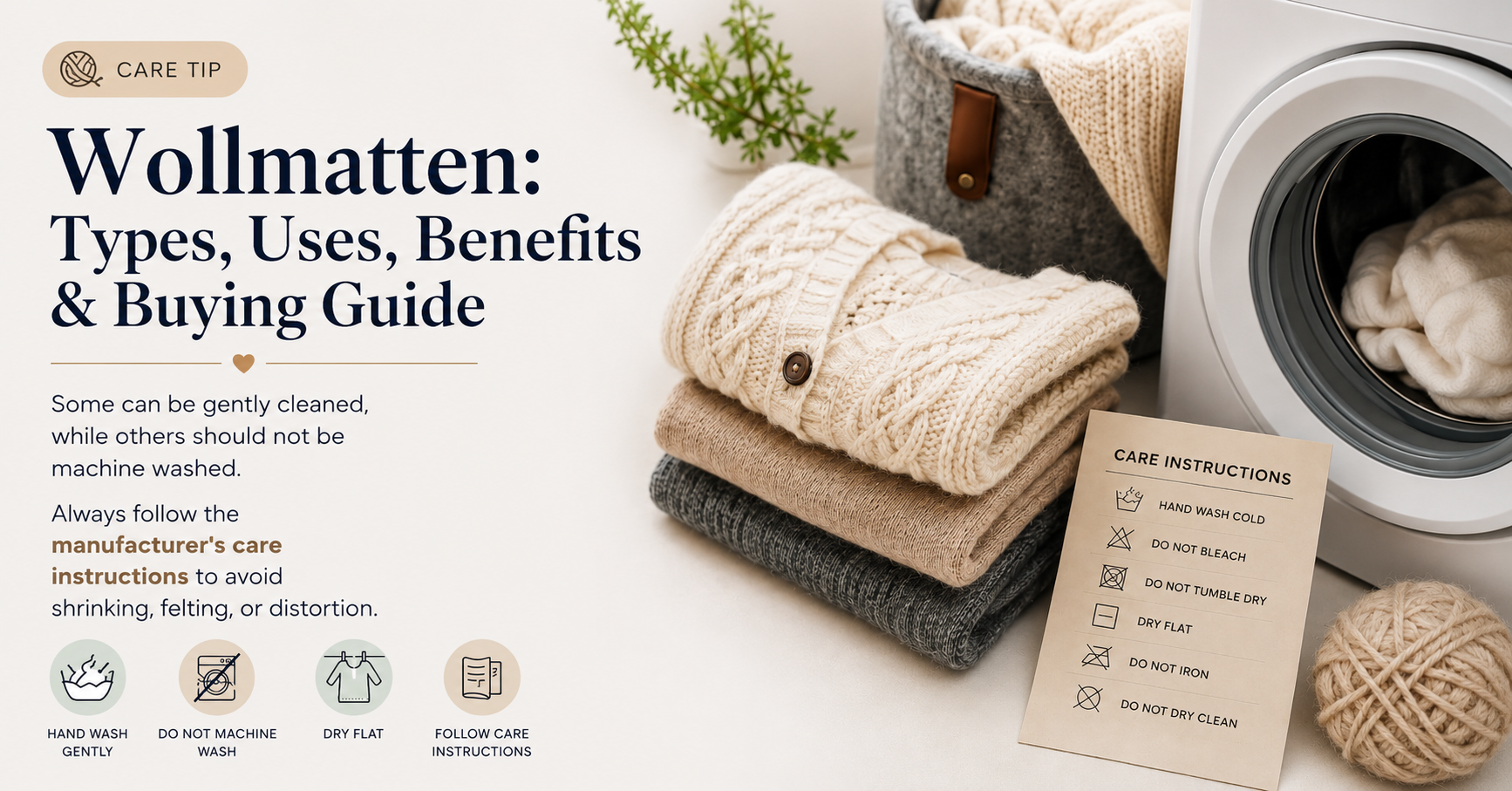
It depends on the product. Some can be gently cleaned, while others should not be machine washed. Always follow the manufacturer’s care instructions to avoid shrinking, felting, or distortion.
Are Wollmatten biodegradable?
A pure wool mat may be biodegradable, but not every finished Wollmatte is made only from wool. Backing, adhesives, dyes, and synthetic reinforcement can affect how the product should be disposed of.
How long do Wollmatten last?
Lifespan depends on product quality, density, location, moisture exposure, cleaning, and how heavily the mat is used. A well-made Wollmatte used for its intended purpose can provide years of service.
You May Also Like: Hollon Fire and Burglary Safe FB-685 Oyster Series
